2026 mileage allowance: rates and calculation
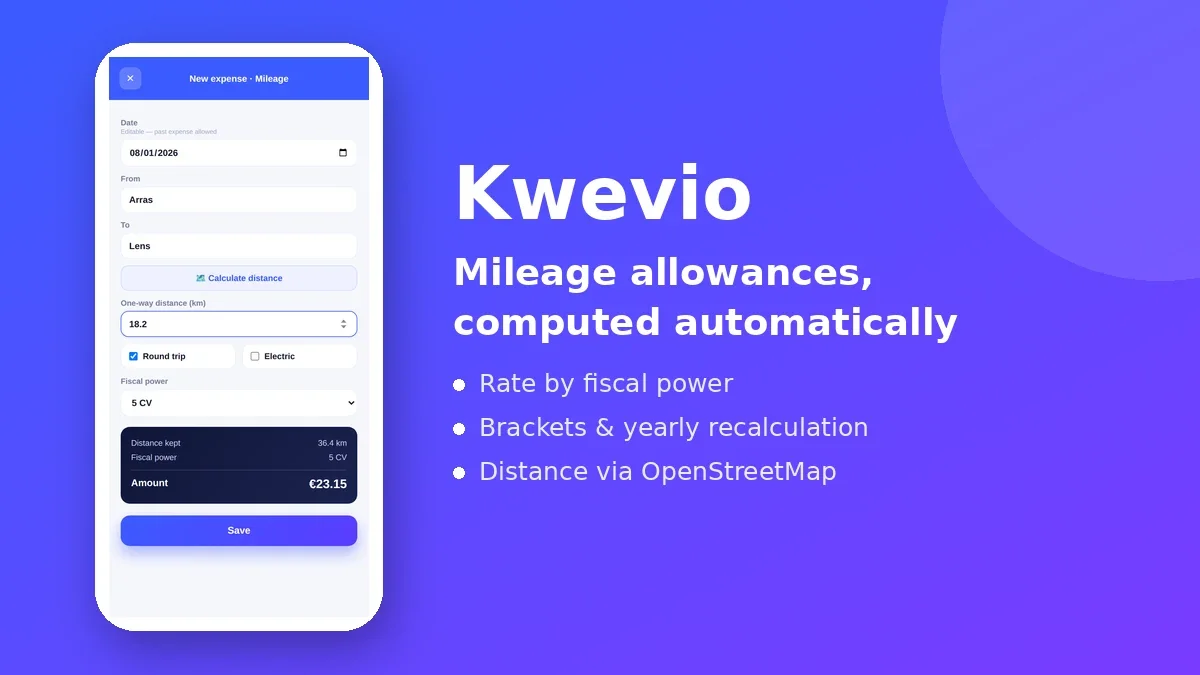
2026 mileage allowance: understand the rate by fiscal power, the distance brackets, the electric top-up and a worked example, plus the records you must ke…
Practical guides to track, compute and justify your business expenses: mileage, VAT, records and accounting export.
Managing your business expenses well is more than a bookkeeping formality — it is a matter of cash flow, saved time and peace of mind if you are ever audited. This section gathers practical guides to record, compute and justify your business spending, from the mileage rate to the file you hand to your accountant, without losing your evenings or your patience over it.
Every trip, every business meal, every hotel night is a deductible expense and often a slice of recoverable VAT. But it still has to be captured, sorted and justified correctly. Spreadsheets quickly show their limits: formulas that break, receipts scattered everywhere, a rate applied from memory, VAT worked out by hand. The result is missed amounts, errors that propagate all the way to the return, and hours lost at year-end rebuilding everything. A regular method, backed by a tool that computes and keeps the evidence, turns this chore into a simple reflex and secures what you declare.
For many freelancers and salespeople, mileage is the heaviest item. Its calculation depends on the vehicle's fiscal power, the annual distance and the nature of the trip, with a twist spreadsheets handle poorly: once a threshold is crossed, the scale applies to the whole year's distance, retroactively. Add the electric-vehicle top-up and the one-way versus round-trip distinction. Our guides break down the bracketed logic, how to get an accurate amount trip after trip, and the travel records to keep so your allowance stands up to scrutiny.
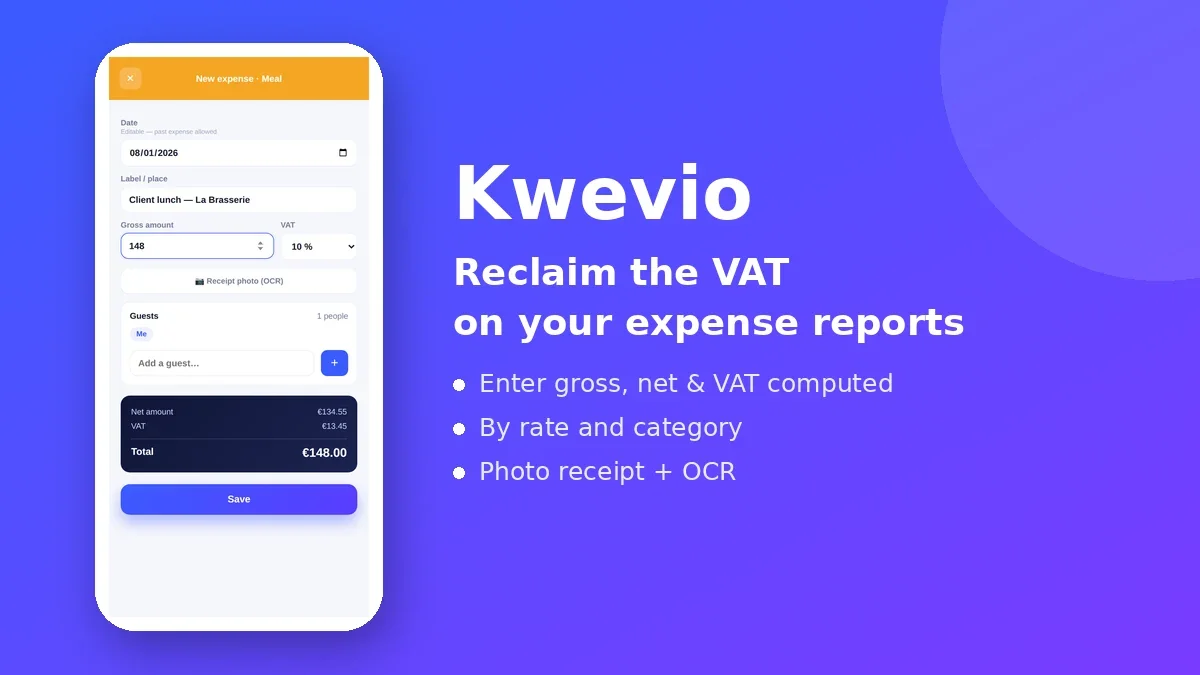
Behind every tax-inclusive payment hides potentially deductible VAT that many let slip for want of method. It all comes down to three points: knowing which items qualify, since the rule varies widely between a meal, accommodation and travel; correctly moving from gross to net to isolate the tax at the right rate; and holding a compliant invoice, without which no recovery is possible. Tracking your recoverable VAT month by month, rather than discovering it at year-end, lastingly changes how you deal with this constraint.
An expense report is only worth something if it goes all the way to the accounting entry. The point, then, is to link field entry to handover to the accountant: photograph the receipt as you spend, let automatic reading pre-fill the amount and date, sort by category, then export to Excel or CSV, monthly or yearly, with VAT broken down and receipts attached. That continuity — from the restaurant slip to the file ready for payroll or the firm — is what separates reliable tracking from a pile of papers to sort.
2026 mileage allowance: understand the rate by fiscal power, the distance brackets, the electric top-up and a worked example, plus the records you must ke…
Reclaiming VAT on your expense reports: which items are deductible, how to move from gross to net, and which records to keep to secure the deduction.